
Nvidia’s DLSS 5: Balancing Image Quality and Controversy
In a notable unveiling at Gamescom, Nvidia showcased DLSS 5, the latest iteration of its AI-driven image enhancement technology, stirring dialogue among gamers and developers alike. Initially, this technology had faced significant backlash due to concerns that it could heavily alter character models, creating unrealistic portrayals reminiscent of digital beauty filters. However, Nvidia strived to clarify its intentions, emphasizing that the heart of DLSS 5 was to grant developers substantial control over its effects.
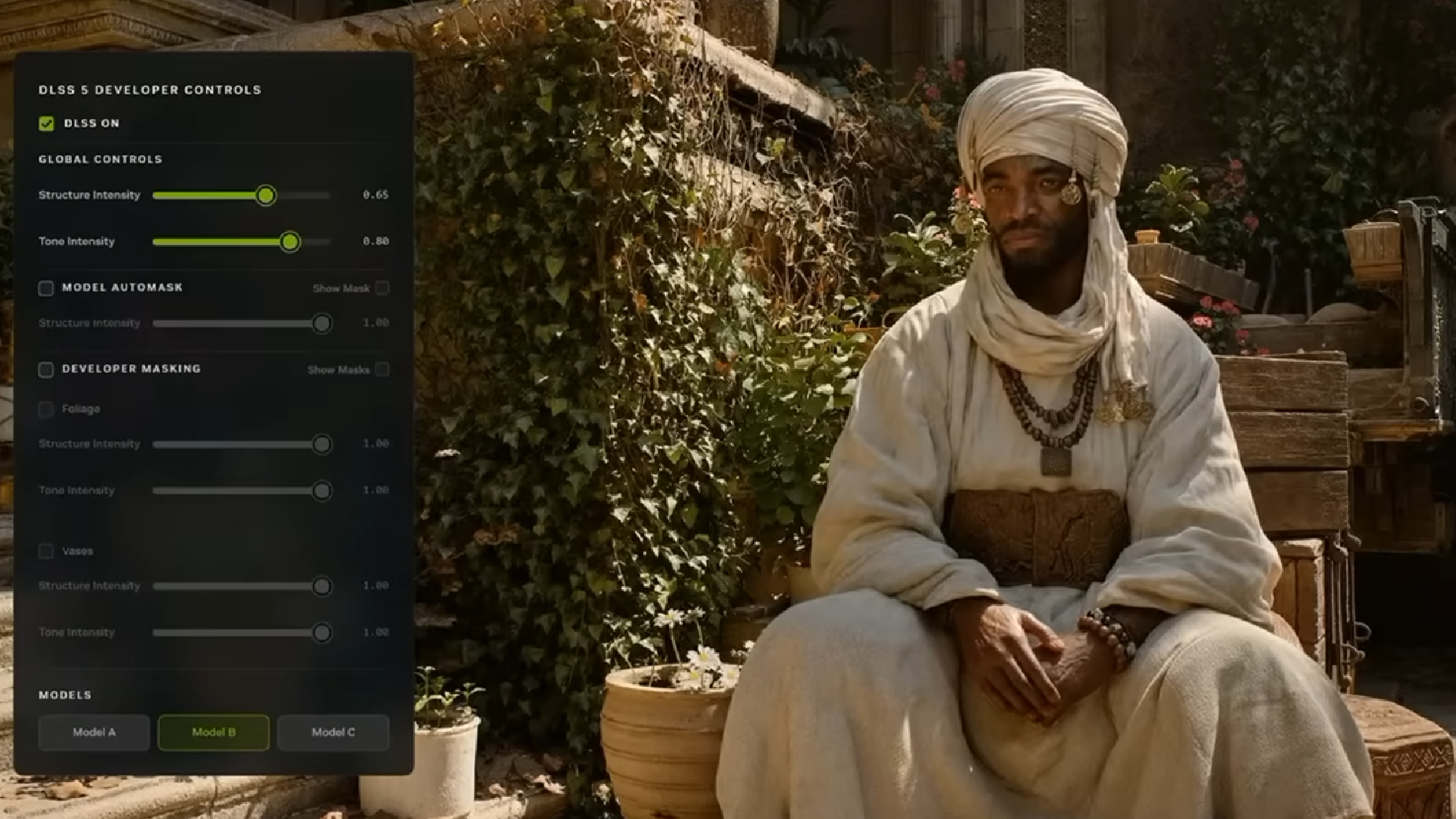
During the demonstration, a character from the Zorah demo exhibited subtle changes under the new technology. Observers noted a shift towards more photorealistic lighting and detailed textures, albeit not to the extreme level previously feared. The visual improvements were controllable via two sliders labeled “structure intensity” and “tone intensity,” which allowed developers to fine-tune the enhancements to suit their game’s artistic vision. These were successfully set to mid-range levels, producing satisfying results without straying into the territory of over-exaggeration.
The demonstration also highlighted the advanced masking feature within DLSS 5, which enabled developers to apply enhancements selectively to specific elements in a scene while leaving others unchanged. This feature offered much-needed creative freedom, aligning with the artistic intentions behind game design.
Despite the technology’s promising capabilities, concerns about its performance remained prominent. Reports indicated a substantial performance impact, estimated between 50 to 60 percent when DLSS 5 was activated. Such a performance hit raised questions about its practicality, especially given the high standards of modern gaming. The potential for improved graphics comes at a cost, which may deter some players from experiencing the enhancements.
Additionally, the ethical implications surrounding AI integration into gaming continue to fuel debates. With many developers expressing skepticism regarding generative AI, the industry is at a crossroads. As Nvidia positions DLSS 5 to enhance gaming experiences, the overarching question remains whether players are comfortable with the AI-enhanced direction that gaming is taking.
The event effectively showcased that DLSS 5 could render stunning imagery if wielded judiciously; however, it also highlighted the discomforts and potential pitfalls of AI involvement in creative media. Overall, the DLSS 5 technology will be officially launched on September 3, and gamers have a significant decision to make concerning its adoption in their gaming experiences.
Editorial Note: This news illustrates the ongoing evolution of gaming technology and the balance developers must maintain between enhancing visual fidelity and preserving the artistic integrity and expectations of players.