
Title: Nvidia’s DLSS 5: A Double-Edged Sword for Gamers
Last week, Nvidia presented its latest technology, DLSS 5, aiming to revolutionize the gaming experience through enhanced graphics powered by artificial intelligence. Many gamers approached this announcement with skepticism, especially given the mixed reviews of earlier versions that failed to impress visually. However, Nvidia’s new approach introduced some surprising updates, challenging previous misconceptions.
Despite its potential, the initial reception of DLSS 5 was clouded by a significant concern: activating this feature drastically reduced gaming performance, reportedly by 50 to 60% regardless of the title played. This substantial decrease in frame rates posed a critical barrier for many enthusiastic gamers eagerly anticipating the integration of advanced AI into their favorite titles.
Six months earlier, Nvidia had stated that running DLSS 5 required two high-end RTX 5090 graphics cards, highlighting the significant advancements made since then. Although the targeted improvements were noteworthy, many users wondered how effective these adjustments would be when tested in real-world gaming scenarios, particularly given the ongoing limitations of current graphics hardware.
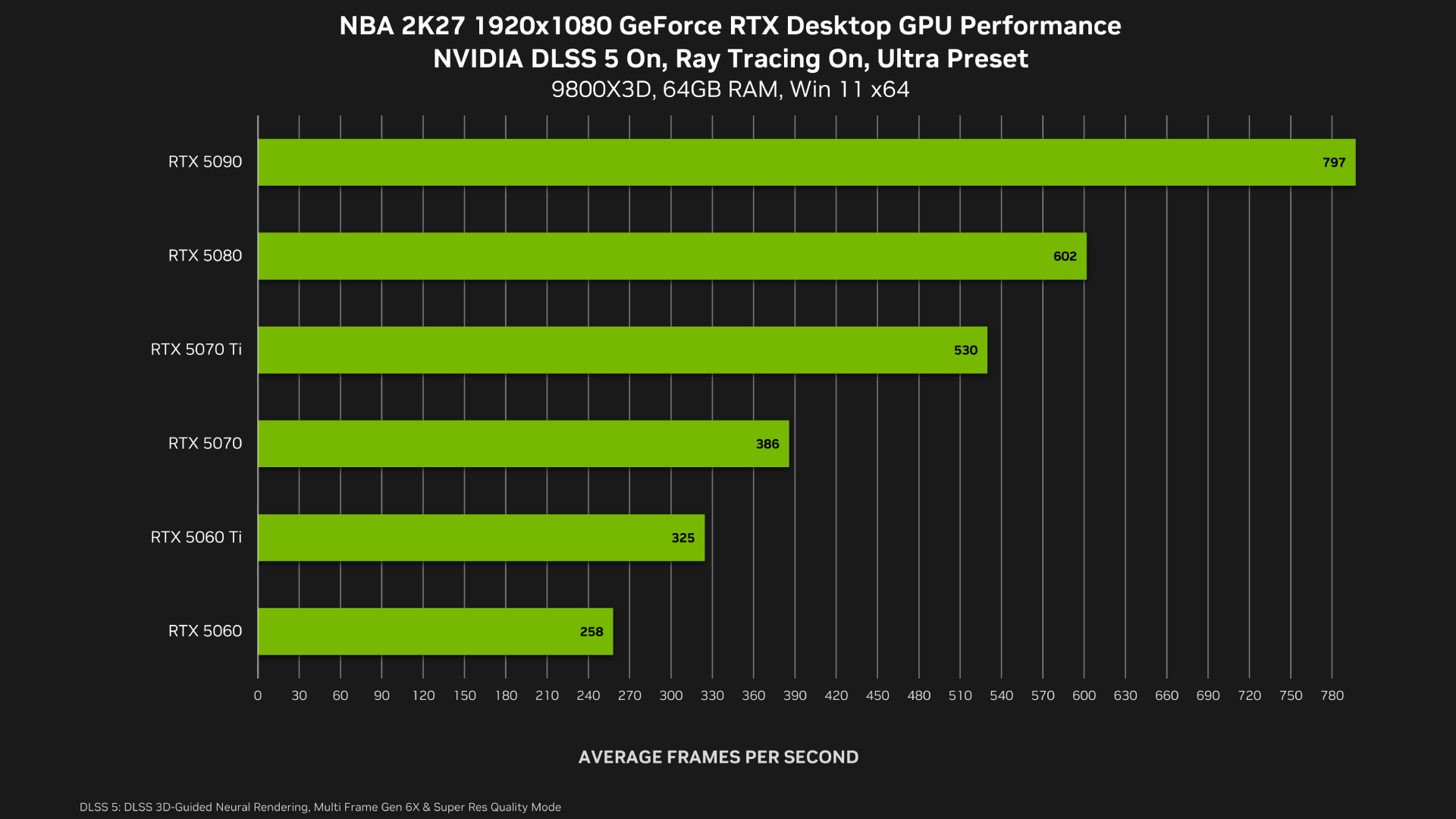
To underscore these performance metrics, Nvidia provided detailed charts illustrating frame rates achieved while utilizing DLSS 5. For instance, while the RTX 5060 managed an impressive 258 frames per second in NBA 2K27 at 1080p with ray tracing and DLSS enabled, the actual game performance lurked around a much less exciting 43 fps. At higher resolutions such as 4K, the disparity persisted, raising questions about the tangible gameplay benefits of DLSS under demanding conditions.
Gamers invested heavily in high-end graphics hardware often expected to utilize its full potential for seamless performance, rather than endure such crippling reductions in frame rates. AI’s involvement in altering imagery for gaming had already sparked concerns in the community, and with DLSS 5 showing such drastic performance trade-offs, many remained uncertain about its ultimate value.
In conclusion, while Nvidia’s ambition with DLSS 5 showcased promising innovations, the considerable performance costs and the ongoing AI debate presented significant hurdles for widespread acceptance among gamers. Editorial material: This news illustrates a critical intersection between advanced technology and gaming performance, raising essential questions about the future of graphics in gaming as developers and players navigate these complex challenges.