
Unveiling the First Recorded Trebuchet Victim: A Skeleton’s Story
In a fascinating revelation from the historical depths of Scotland, an ancient skeleton has been identified as possibly the first documented victim of a trebuchet. Excavations in 1997 underneath Stirling Castle revealed multiple remains, but it was Skeleton 150 that drew particular attention due to the distinct and severe battle-related injuries it sustained.
Previously buried beneath the chapel, these five skeletons, dated back to the 1300s, exhibited clear signs of violent deaths. Skeleton 150 bore the brunt of trauma, showcasing over 160 fractures, which starkly indicated a grim fate reminiscent of being struck by a high-velocity object—a detail that was hard to ignore for the bioarchaeologist Jo Buckberry from the University of Bradford.
Upon closer examination of the bones, Buckberry noted the remarkable extent of damage. Among the injuries were a shattered leg, numerous rib fractures, and an extraordinary number of breaks in the skull. Such catastrophic harm suggested a fatal encounter with something significant and forceful. Buckberry likened the injuries to those sustained in vehicular collisions, questioning how a medieval soldier could incur such devastation.
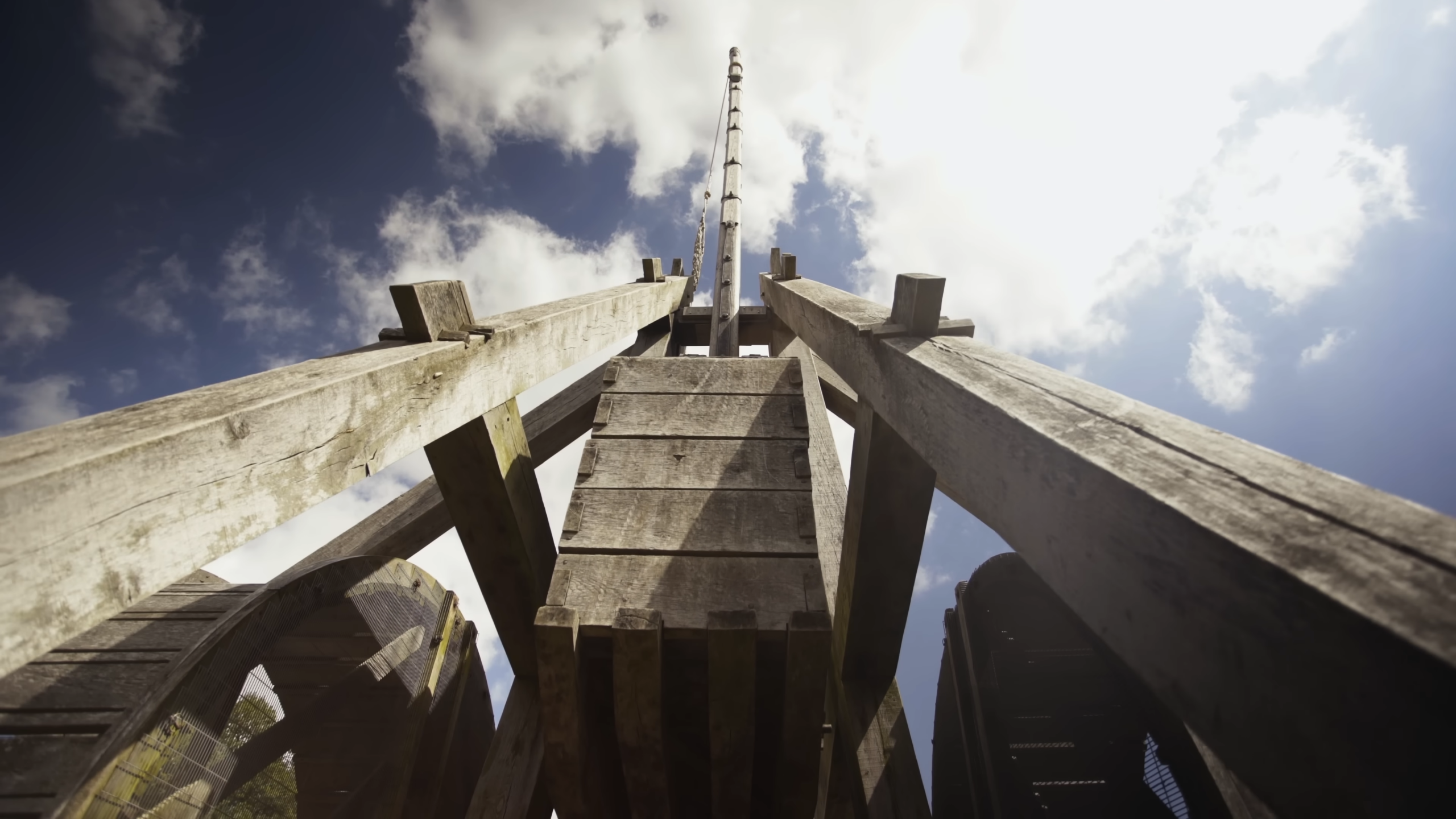
Connecting the dots of history, it became plausible that the injuries were inflicted during one of the brutal sieges Stirling Castle underwent towards the end of the 13th century. The castle, vital to Scottish military strategy, fell in 1304 after an extensive siege by the English, who utilized an immense trebuchet aptly named “The War Wolf.” This massive siege engine was noted for its capacity to launch projectiles with deadly precision, capable of obliterating stone walls and, tragically, the lives behind them.
The findings presented by Buckberry, which included insights shared at the 25th European Paleopathology Association meeting, proposed that the injuries of Skeleton 150 aligned with impacts from such siege weapons. Such lethal artillery was not common for the period, emphasizing the rarity and historic significance of this finding.
As this skeleton takes its place in the annals of history as a poignant reminder of the brutal realities of medieval warfare, it underscores the lethal precision with which trebuchets operated. This discovery not only enriches our understanding of historical battles but also reflects on the human stories intertwined with such violent episodes.
Editorial material: This news highlights the intersection of archaeology and medieval military history, unraveling the grim realities of warfare and emphasizing the significance of advanced weaponry in historical conflicts.