
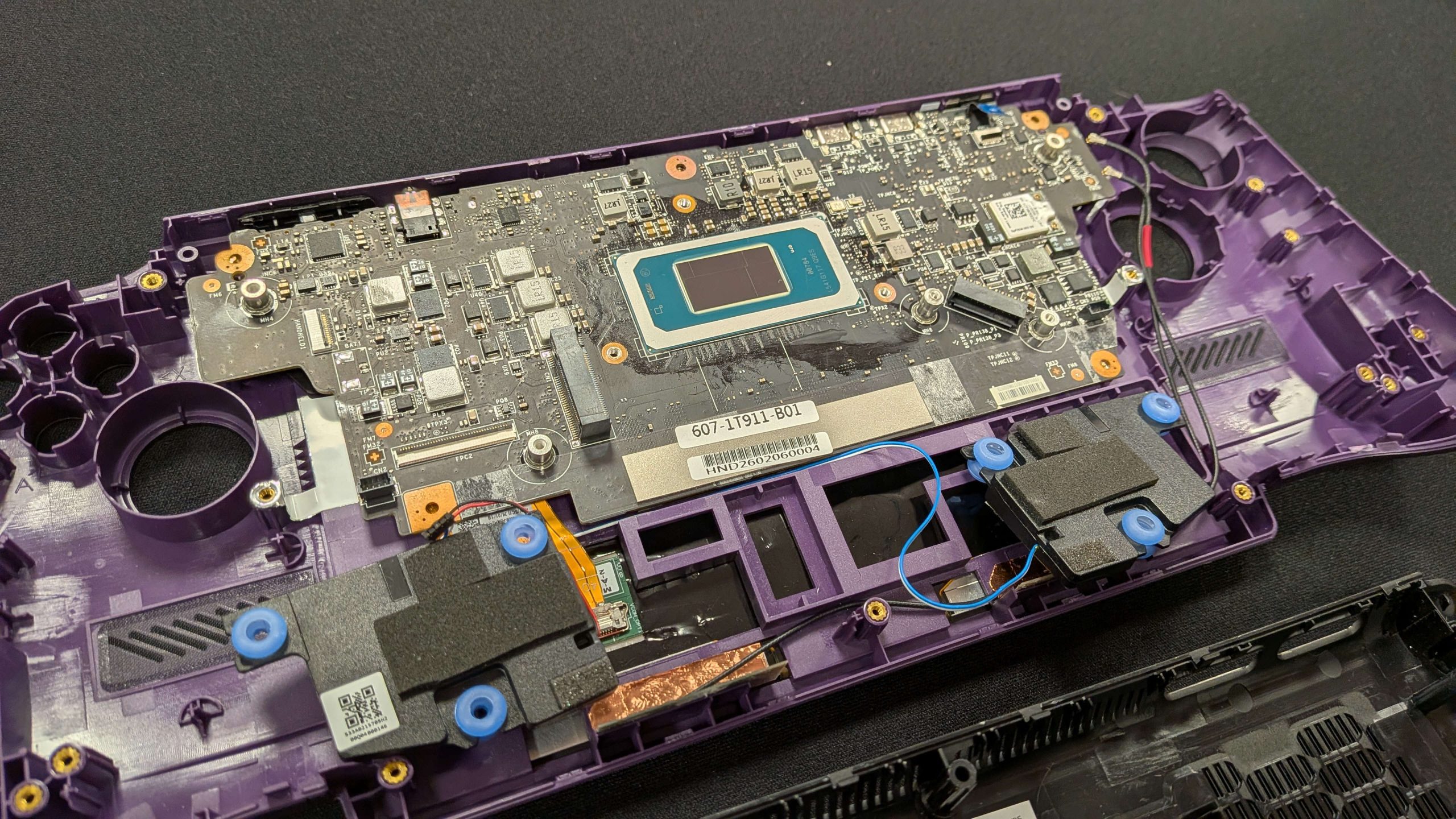
Intel’s Upcoming Panther Lake Chip Promises Affordable Gaming Handhelds
Recent revelations hinted at Intel’s plans to introduce a new Panther Lake chip tailored for the handheld gaming market, potentially making gaming on the go more accessible. According to hardware insider Jaykihn, the upcoming processor would feature a configuration of four performance cores, accompanied by four efficient cores and a notable inclusion of four Xe GPU cores. This adjustment indicated a strategic shift towards enhancing graphical capabilities while minimizing reliance on higher core counts.
Previously, Intel launched the Arc G3 and G3 Extreme processors, which predominantly focused on handheld devices. These models managed to strike a balance between sufficient computational power and an impressive number of Xe cores—ten and twelve respectively—catering to the performance demands of mobile gaming. The G3 Extreme, while receiving praise for its performance, also attracted criticism due to its high price, which positioned it similarly to mid-range gaming PCs, creating a luxury perception around handheld gaming devices.
The four Xe core setup in the new Panther Lake chip might suggest a step towards budget-friendly options. Jaykihn’s insights pointed towards a less energy-intensive design that could fit within more affordable handheld systems, contrasting sharply with the more power-hungry predecessors that required a minimum of four performance cores alongside additional efficient cores to support graphics rendering.
However, the looming concerns over current pricing trends in the tech industry also surfaced. The prices of handheld devices have escalated significantly, largely driven by supply chain issues affecting memory and storage components. Competing in such a market hinted at potential difficulties for the new Panther Lake chip, even if it promised to lower the entry barrier for consumers seeking portable gaming solutions.
Despite the excitement surrounding this hardware news, uncertainty remained regarding the actual implementation and the timing of a potential release. While scaling back to four Xe cores might seem like a step down compared to the previous generation’s eight cores, advancements in architecture could still present advantages, particularly if newer and more efficient components were integrated into future devices.
As the gaming community awaited further developments, the hope was that Intel’s return to the handheld space would rejuvenate interest and create a shift towards affordability amid escalating costs in the hardware market.
Editorial material: This news is significant as it highlights Intel’s initiative to capture the budget-friendly segment of the gaming handheld market, potentially reshaping the industry landscape.