
Exploring Capitalism: A Journey Through Its Quirks and Challenges
In the world of simulation games, various titles have attempted to mirror the complexities of real-world economics, but few have done it with the audacity of Capitalism. From its inception, players encountered a distinctly fabricated pseudo-Earth where they could create expansive business empires from the ground up. Released in 1995, this game challenged players to venture beyond mere profit margins.
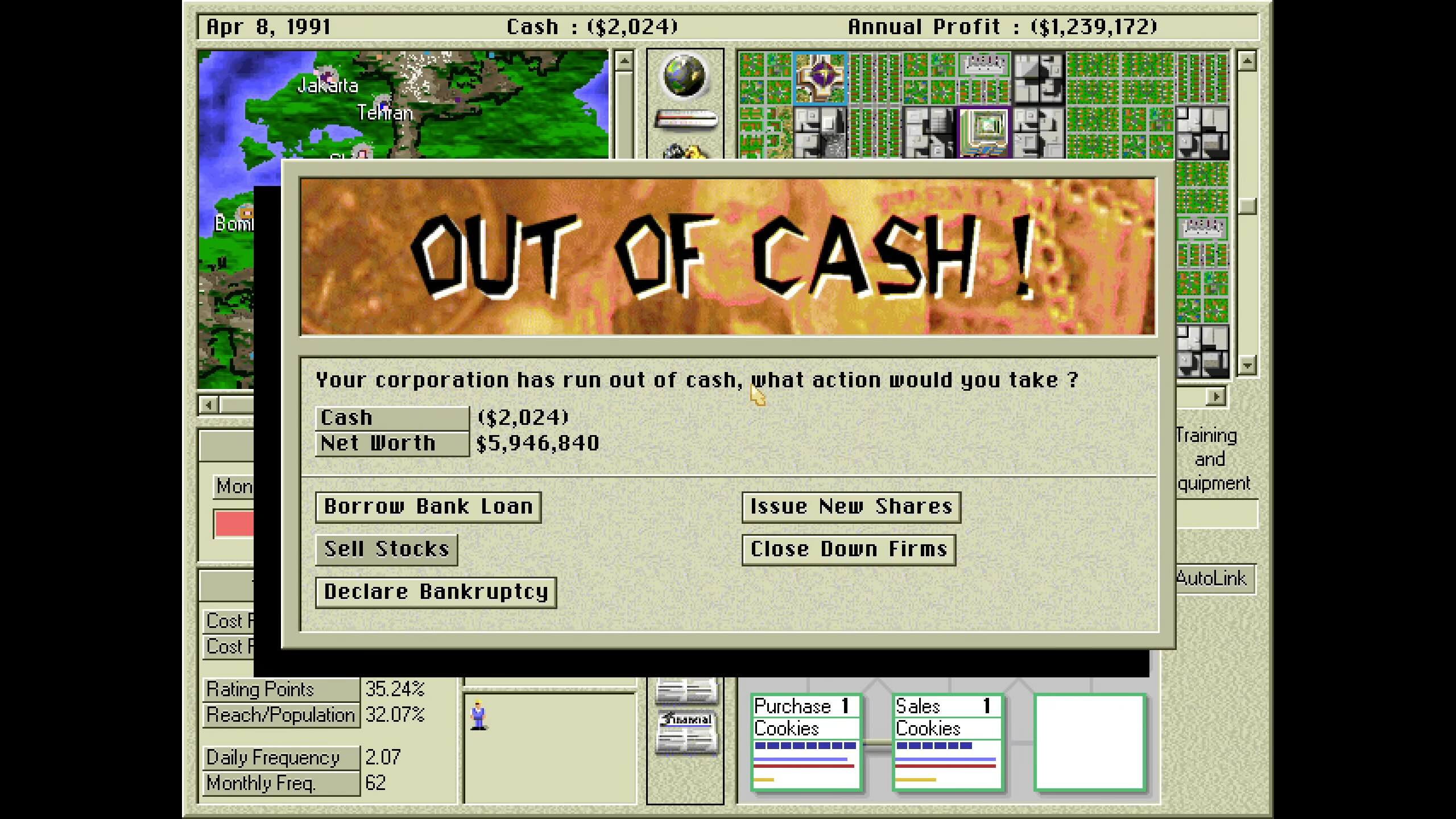
Initially, users found themselves navigating a sea of peculiar market dynamics that defied traditional strategies. Starting with a department store stocked solely with laundry detergent in a bustling locale like Jakarta, players like myself quickly learned that supply chain dynamics could be merciless. The initial strategy floundered, as demand for detergent dwindled, reflecting a common critique of game balance where unnecessary stock piled up while financial losses spiraled.
Continually adapting, players were compelled to diversify their offerings to remain afloat. Cookies and leather shoes were introduced alongside the detergents in a bid to capture broader market interest. Surprisingly, this shift did yield a slight uptick in sales, though losses persisted. One might have found themselves pondering questionably structured business decisions that, funnily enough, were part of a larger narrative tied to the game’s satirical take on capitalism’s more absurd aspects.
Building new stores—with products like CPUs and silica—evolved into another chapter of chaos marked by bewildering fluctuations in profitability. Despite early failures, by experimenting with marketing strategies and consumer engagement tactics, some players—myself included—climbed out of the labyrinth of negative earnings. New partnerships with local TV stations and outlets allowed creative marketing and led to unexpected profits, albeit through questionable product sales tactics.
Successive gameplay iterations showcased the game’s unique feature of dynamic world generation, allowing diverse city layouts and unexpected challenges each time players started anew. It captured a spirit of innovation cloaked in economic parody while still retaining a level of engagement that mirrored the complexities of real-world business decisions.
As the narrative unfolded, there were moments where the game transcended its digital confines to provoke thought about actual economic systems and the whims of market trends. Ultimately, Capitalism has remained a staple, not just for its gameplay, but also as a commentary on the excesses and follies of an unbridled market system.
Editorial material: This exploration emphasizes not just the entertaining elements of Capitalism but also its cultural commentary on economic theory, making it relevant for discussions about today’s economic realities.