Xbox Manager Boldly Claims AI is Integral to Gaming’s Future
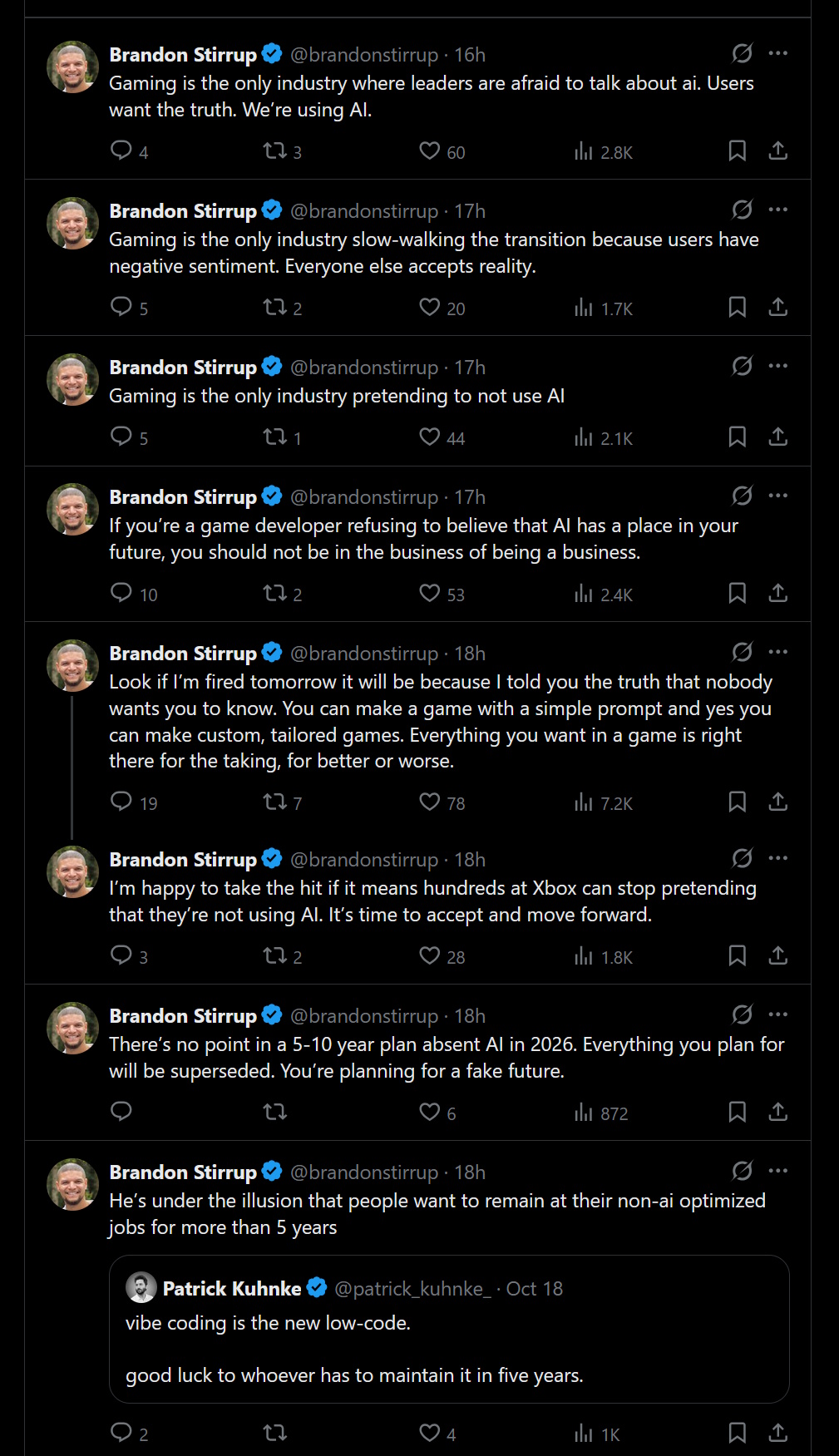
In a groundbreaking declaration, Brandon Stirrup, a senior business strategy manager at Xbox, previously expressed vigorous support for the integration of artificial intelligence in the gaming industry. His statements, shared on the social media platform X on October 18, ignited discussions regarding the role of AI in game development and the industry’s need to embrace these emerging technologies.
Initiating the conversation, Stirrup recounted a personal experiment where he developed a rudimentary game within just a couple of days, claiming that it only took him about three hours of focused work. He boldly proclaimed that anyone, with the right prompts, could create games, thus lowering the barriers to entry for aspiring developers. “You can make a game with just a simple prompt,” he emphasized, challenging current notions within the industry.
Stirrup went on to criticize studios and developers that refuse to integrate AI into their workflows, asserting that such a stance was tantamount to “planning for a fake future.” He expressed his willingness to face professional repercussions for speaking out, stating, “If I’m fired tomorrow, it will be because I told you the truth that nobody wants you to know.” His candor reflected a growing sentiment that AI is not merely a tool for the future but an essential part of gaming’s evolution.
Despite the backlash and numerous responses he received—prompting him to deactivate his X account—Stirrup maintained that transparency about AI usage at Xbox was long overdue. He reinforced that Xbox was already utilizing AI technology, just like many other companies anticipated in the coming years. He called for a collective acceptance of AI’s presence in the industry, suggesting that ongoing denial would only hinder progress.
Interestingly, Stirrup’s fervent advocacy for AI also aligned with broader trends in the gaming sphere, where leaders across various companies, including Epic Games, acknowledged the transformational potential of AI. Epic’s CEO, Tim Sweeney, had similarly indicated that the studio was reorganizing its teams for “maximum AI acceleration.”
Additionally, Stirrup previously advised employees affected by layoffs to leverage AI tools like Copilot to organize their professional achievements, further showcasing his belief in AI’s capacity to enhance productivity and career development.
The crux of Stirrup’s message was clear: the gaming industry must adapt and evolve with the technological landscape that AI represents. His statements underscored a pivotal moment for gaming, where openness about AI integration could potentially reshape its future.
Editorial material: This news highlights the critical intersection of AI technology and gaming, demonstrating its potential to transform both the creative process and industry standards.